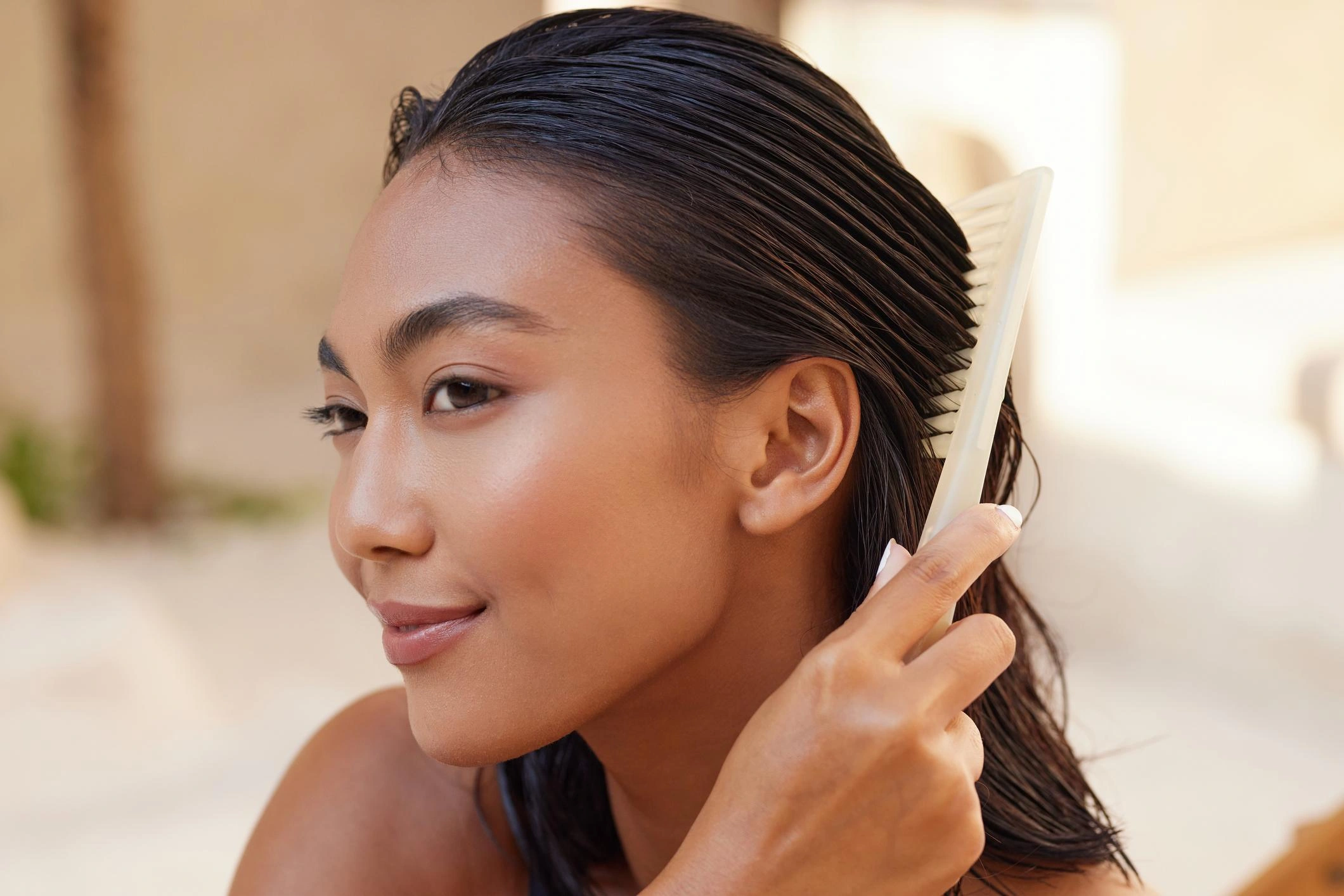
True hair care looks at your scalp's health, your hair's porosity and texture, the environmental stressors affecting it, and the internal factors — nutrition, hormones, stress — that influence hair growth. When you treat hair care as a holistic practice, the results are dramatically different.
“The most effective hair care routine isn't the most expensive one — it's the one designed specifically for your scalp and hair type.”
What Is Hair Care and Why Does It Matter?
Hair care is the practice of maintaining and improving the health, strength, and appearance of your hair and scalp. True hair care goes beyond shampooing and conditioning — it addresses root causes, not just surface symptoms. Your hair grows stronger, sheds less, and simply looks and feels better over time when given genuine care.
Common Hair Problems and What's Really Behind Them
- Hair Fall — 50-100 strands daily is normal, but excessive fall signals nutritional deficiencies, stress, hormonal shifts, or an unhealthy scalp
- Dandruff — often caused by a yeast-like fungus, not just dryness; harsh treatments often make it worse
- Dry and Frizzy Hair — signals lack of moisture retention; heat styling and overwashing are common culprits
- Hair Thinning — linked to genetics but also to poor diet, high stress, scalp inflammation, and hairstyles
The Essential Hair Care Routine: Step by Step
Step 1: Cleansing — Choose a shampoo matching your scalp type, not just hair type. Frequency matters — overwashing strips natural oils. Step 2: Conditioning — Apply from mid-length to ends, not roots. Leave on for 2-3 minutes. Use deep conditioning masks weekly. Step 3: Nourishing — Include scalp oils and serums between washes; get enough protein, omega-3s, and vitamins A and E. Step 4: Protection — Use heat protectants before styling, UV-protective sprays for sun, and satin pillowcases at night.
How to Choose the Right Hair Care for Your Hair Type
Oily Hair — use gentle clarifying shampoos every alternate day and focus on balancing oil production. Dry Hair — opt for moisturizing, sulfate-free shampoos and use deep conditioning masks weekly. Normal Hair — maintain balance with a mild shampoo 2-3 times weekly. Damaged Hair — prioritize protein-rich treatments and bond-repairing formulas while avoiding heat.
Benefits of Professional Hair Care Treatments
- Deep Nourishment — clinical-grade formulations deliver active ingredients directly where needed
- Scalp Health Improvement — professional care creates the ideal environment for growth
- Long-Term Results — clinical treatments restructure and repair at a deeper level
- Expert Diagnosis — professionals identify root causes whether hormonal, nutritional, or structural
Why Personalized Hair Care Works Better
A personalized hair care approach starts with a scalp assessment analyzing oil production, hydration levels, follicle density, and sensitivity. Your treatment plan is then built specifically around your results. People following personalized routines consistently report less hair fall, better texture, and noticeably faster progress than those using generic products.